
 4 MIN READ
 UPDATED AUG 10, 2026
📘 For organization administrators on Toku. Last updated July 23, 2026.
Understand how compensation changes work behind the scenes: when they take effect, approval workflows, and what your employees see in their accounts.
Before you start
- This is background context for anyone who submits or manages compensation changes.
- For step-by-step instructions, see How to change a base salary or How to add bonuses and one-time payments.
- Payroll cutoff is the 10th of each month for most countries. Requests submitted on or before the 10th will be included in that month's payroll. Requests submitted after the 10th will be processed in the following month's payroll.
- Payments are never processed immediately — they are always tied to the next eligible payroll cycle.
- Need a payment sent sooner? Off-cycle payments start at an additional $49 per person.
- Payments over $5,000 USD require pre-funding. Toku's finance team [[email protected]] will reach out with a pre-funding invoice that must be funded before the payment can be processed. Factor this into your timeline, as pre-funding adds an additional step before payroll processing.
How effective dates work
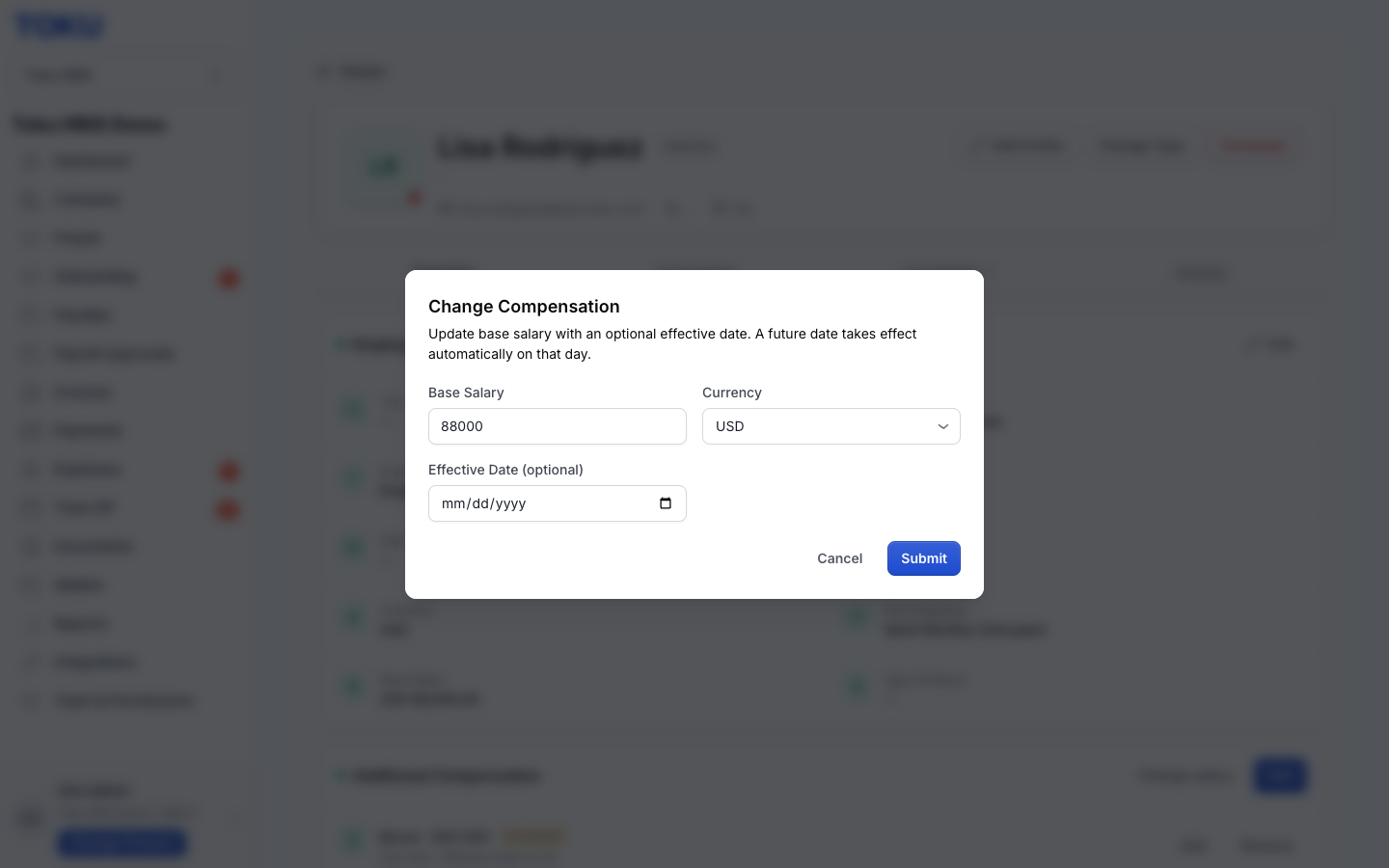
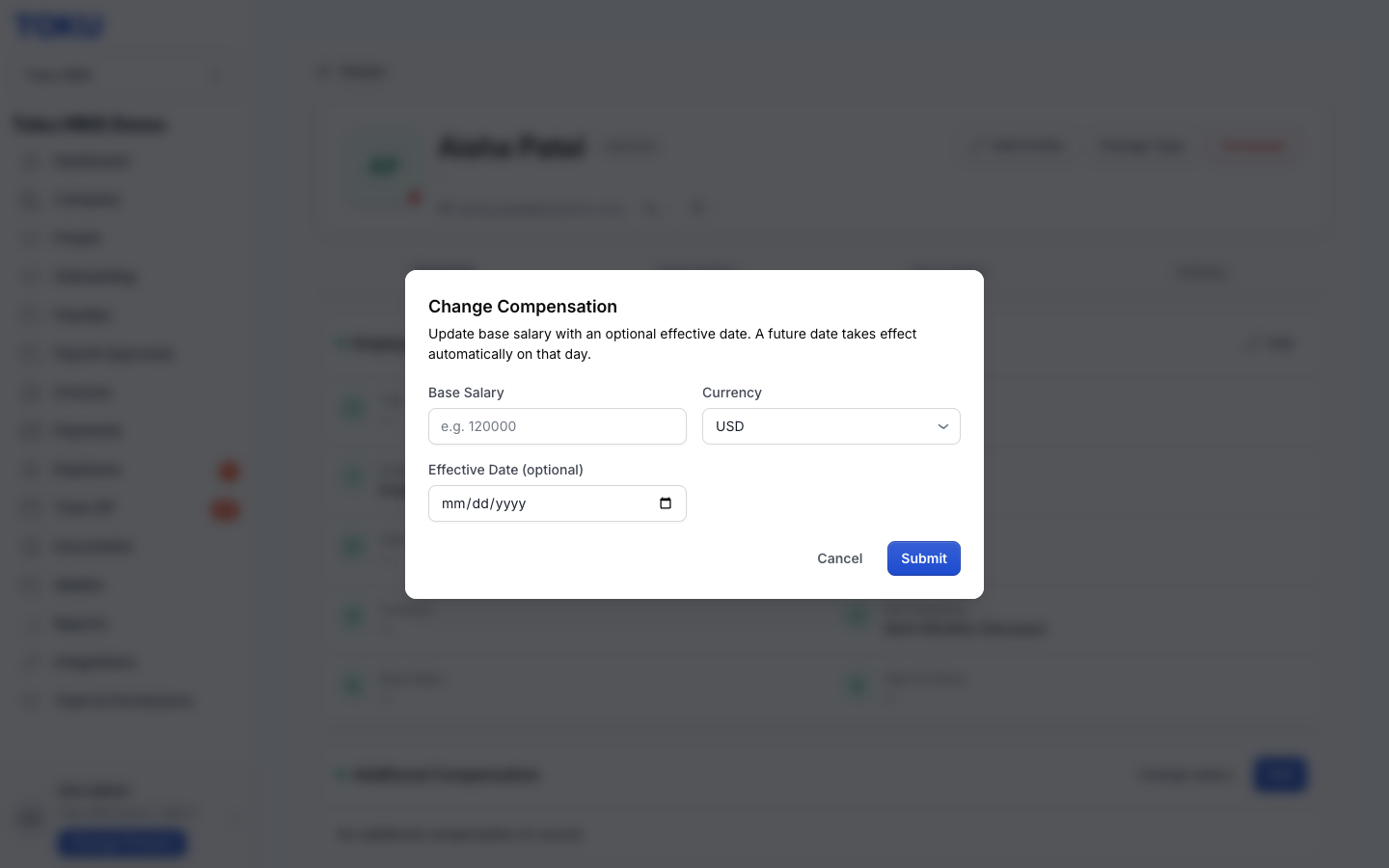
- Every change and payment has an effective date. When you leave the Effective Date field empty, the change is applied as soon as it's processed. When you pick a future date, the change is saved now but only becomes active automatically on that day.
Payroll cycle cutoffs
- Every payroll cycle has a cutoff date - the last day changes can be included in that cycle's payments. A change entered after the cutoff is not paid in the current cycle; it's paid in the next one. Example: if your team is paid twice a month and you add a bonus two days before payday, the bonus most likely arrives with the following payment, not the next one. If a payment must land on a specific payday, enter it as early as possible and ask Toku to confirm the cutoff date for the person's country.
Large amounts may take longer
- Very large bonuses or salary increases may need extra processing time on Toku's side. If a payment must land by a specific date, submit it as early as possible and confirm timing with your Customer Success contact rather than assuming it will process on the standard cycle.
Approvals and pending changes
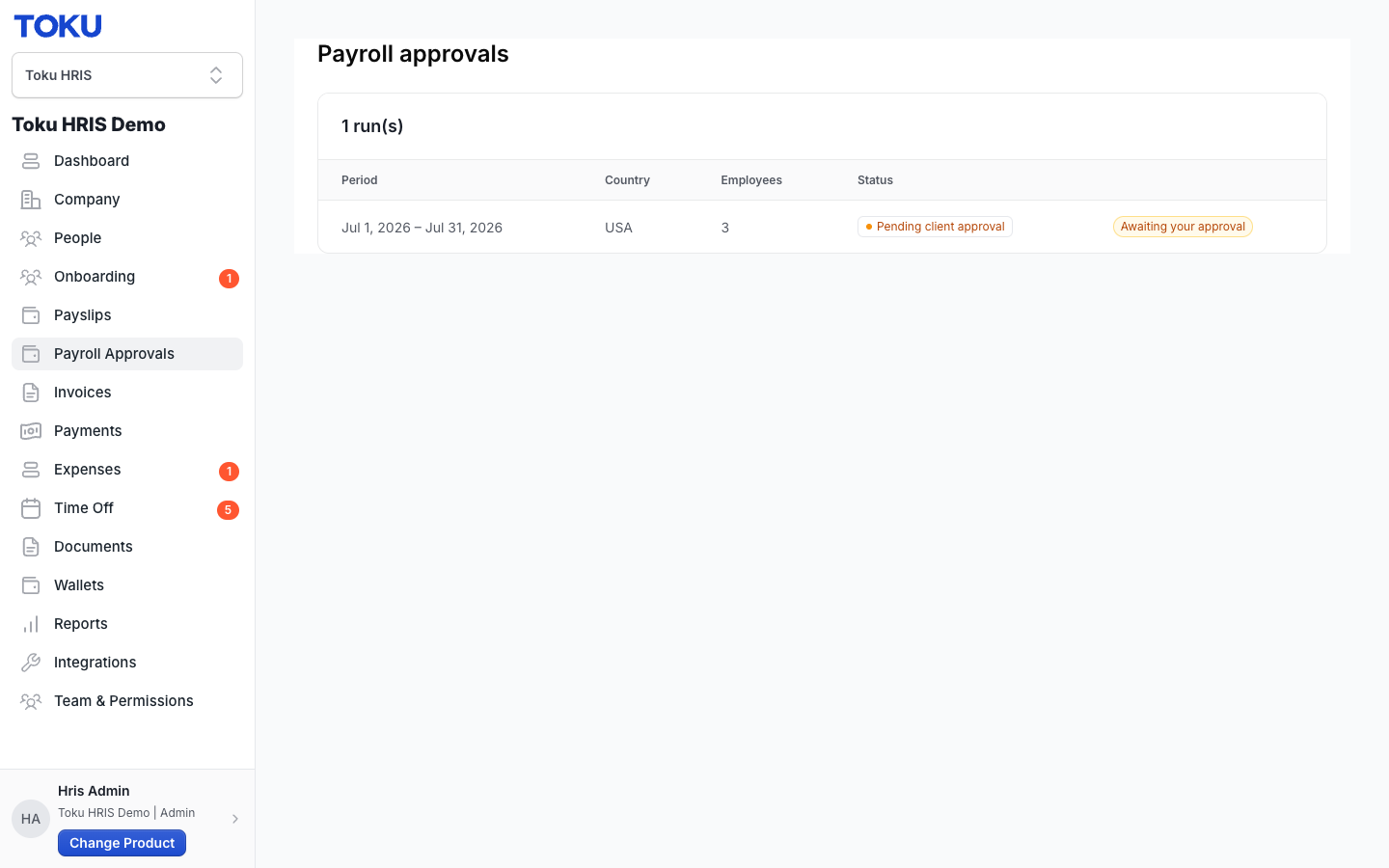
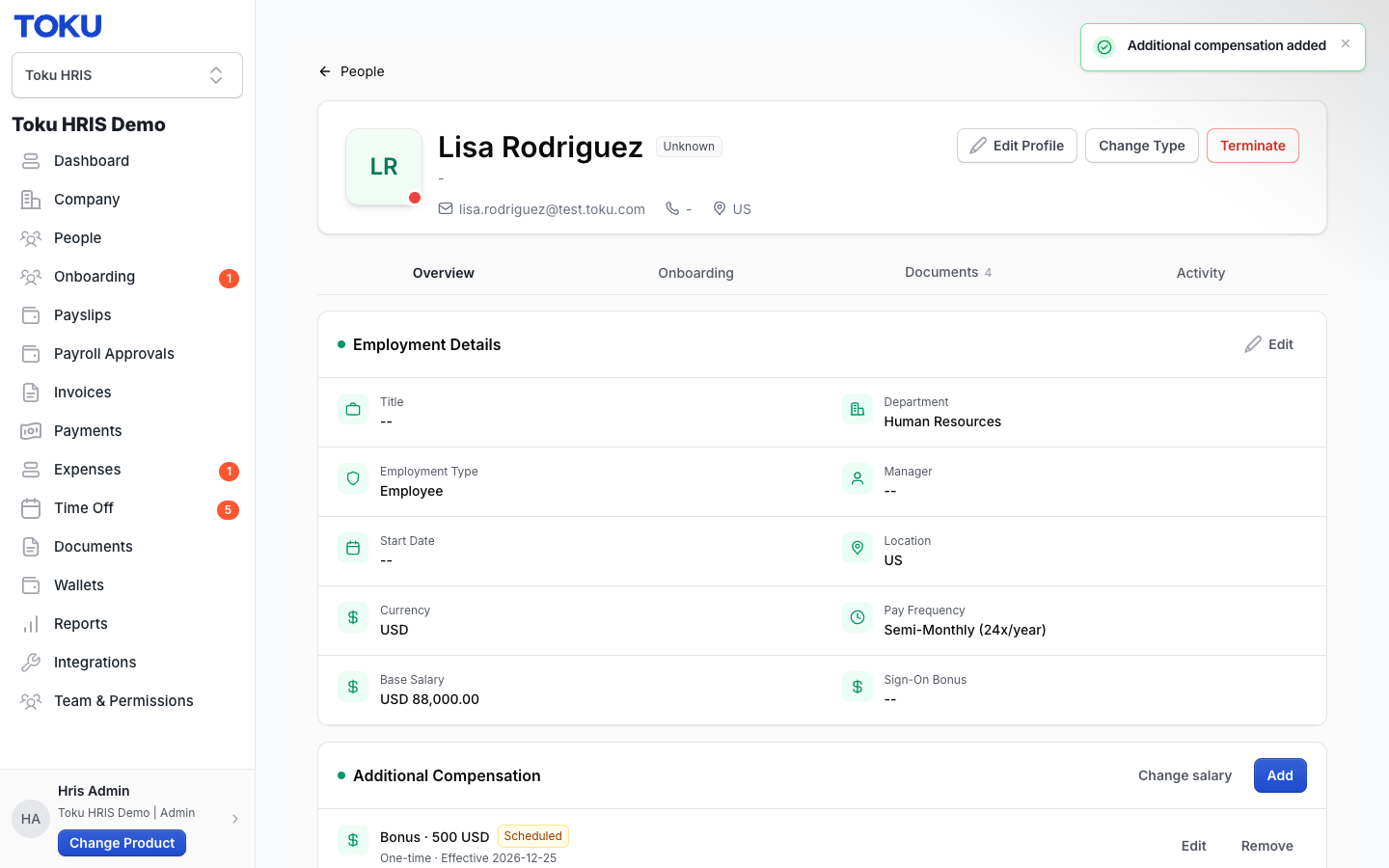
- By default, a submitted compensation change is saved and reflected on the profile immediately - most organizations don't have a separate approval step for the change itself, and the new figure appears in the Additional Compensation or Employment Details section right away. A future-dated entry instead shows a Scheduled tag until its effective date arrives (see "How effective dates work" above). Some organizations may have compensation changes configured to require Toku review before they apply; if yours does, a submitted change may not appear immediately and a yellow notice reading "Changes pending approval" appears in the Additional Compensation section until the review is complete. Separately, Toku's payroll team reviews the resulting payroll run on the Payroll Approvals page - each run shows its period, country, headcount, and approval status, and an org admin approves the run before payments go out. If a change you submitted doesn't show up on the person's profile, don't resubmit it - contact Toku support first, since duplicates create extra correction work later.
What employees see
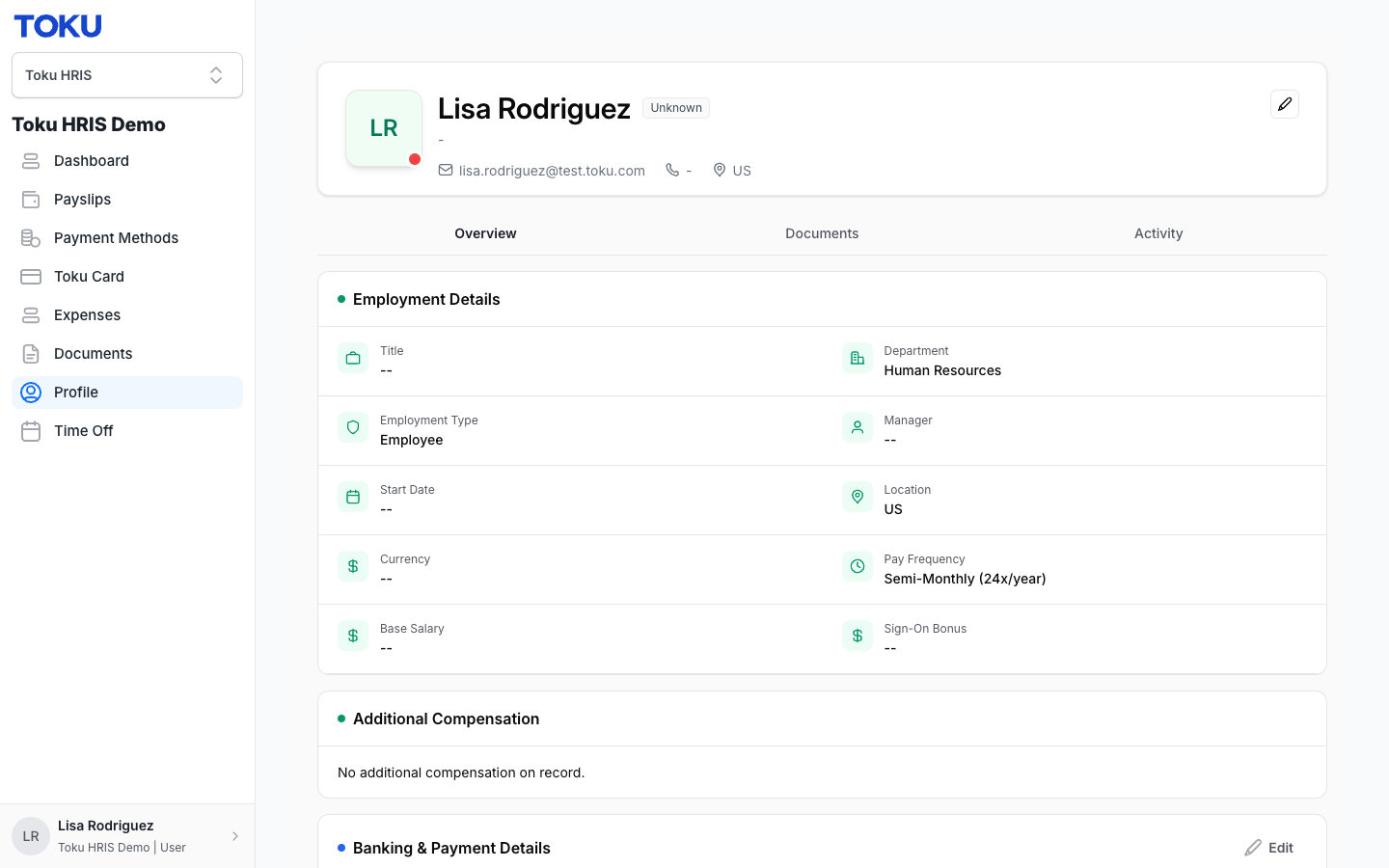
- When employees sign in to their account and open Profile from the left-hand menu, they see the same Additional Compensation section you use - but view-only, with no edit, remove, or add buttons. They cannot see any entries with a future effective date until that date arrives.
Good to know
- Once a base-salary change is applied, the new figure appears in the Base Salary row of the Employment Details section of the employee's profile.
- Entries you schedule with a future effective date don't appear in your employee's profile until that date arrives - that's expected behavior.
Still stuck?
You can email [email protected] to reach our support team. Please include your email address, organization name, and a description of what happened. Screenshots and videos are always welcome to speed up the troubleshooting process. Feel free to reach out any time for further assistance.